
- The investment landscape has changed. Project origination now operates in a more conventional investment environment with clear demands.
- To prevent credits from becoming stranded assets, projects must adapt fluidly to quality labels while designing with multi-asset flexibility to prepare for a transition beyond carbon.
- Filling the missing middle, LEVEL acts as an end-to-end nature finance business, serving as the connector between capital providers and the communities directly managing natural landscapes on the ground.
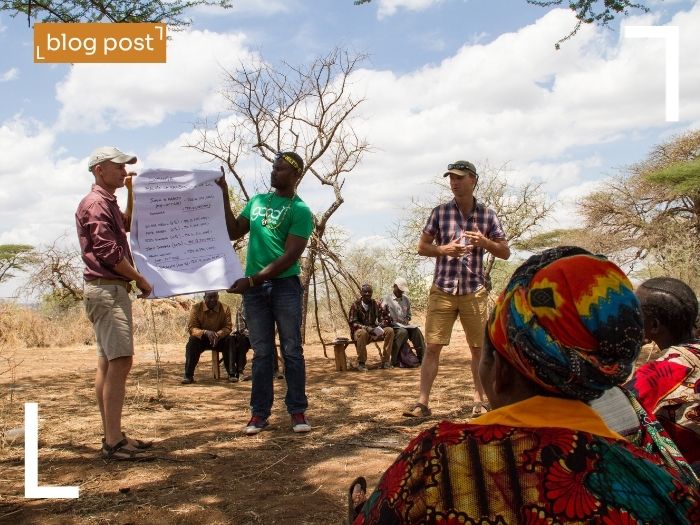
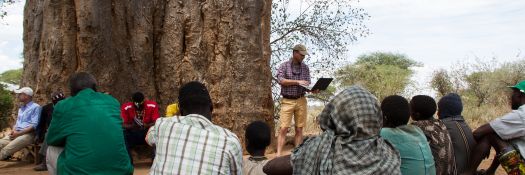
Back in 2011, when Marc and I were piecing together how to develop Carbon Tanzania’s flagship project in the Yaeda Valley, our days were mostly spent in the field, in villages, camping in the bush.. We were measuring trees, sitting down with village leaders, and figuring out how to combine the informal support of friends, local activists and conservationists, as well as our own free time and energy, so that we could test whether community-led conservation could actually be paid for using long-term market-based finance.
Fast-forward to 2016 and during a dedicated two-day strategic review we realised that by then nearly half of our headspace was being spent on something else entirely: commercial strategy. We were working with angel investors who were just as interested in the financial returns as the social and environmental impact and we were building a commercial pipeline that would support the development of two new projects (Makame and Ntakata).
That realisation was in fact the seed of what eventually became LEVEL. It made explicit what we, and everyone else in the global carbon market, have been forced to deal with -half the battle of making carbon finance work for conservation is the commercial side of the business. The famous expression “build it and they will come” rarely applies to carbon finance – you have to build the capacity to engage with global finance, with the world of investment and with seriously demanding buyers.
The shift to conventional investment
The landscape around us has changed significantly. In the early days of Yaeda, we relied heavily on personal networks, shared conservation visions, and blended finance partnerships to get projects off the ground.
Today, project origination operates in a far more conventional investment environment. Institutional investors and capital actors are no longer just asking procedural questions about how a forest is monitored or how a credit is certified. They want precise budgetary forecasts, granular risk assessments, and long-term financial modeling. They need to know that an underlying natural asset has a solid commercial future before committing capital. There are also clear preferences for specific project or credit types that have emerged driven largely by market demand for what is broadly referred to as “high integrity” products.
Building on Carbon Tanzania’s operational history, which has generated and sold over 5 million verified carbon credits, we established LEVEL to bring in specialised capacity in deal structuring, commercialising credits, and market intelligence. But as we’ve adapted to these expectations, we keep returning to a fundamental question: how do we design natural assets today so that they remain valuable and resilient ten, fifteen or twenty years down the line?
Reading the market ahead of us
From our daily conversations with buyers and investors, two major shifts are shaping how we answer that question:
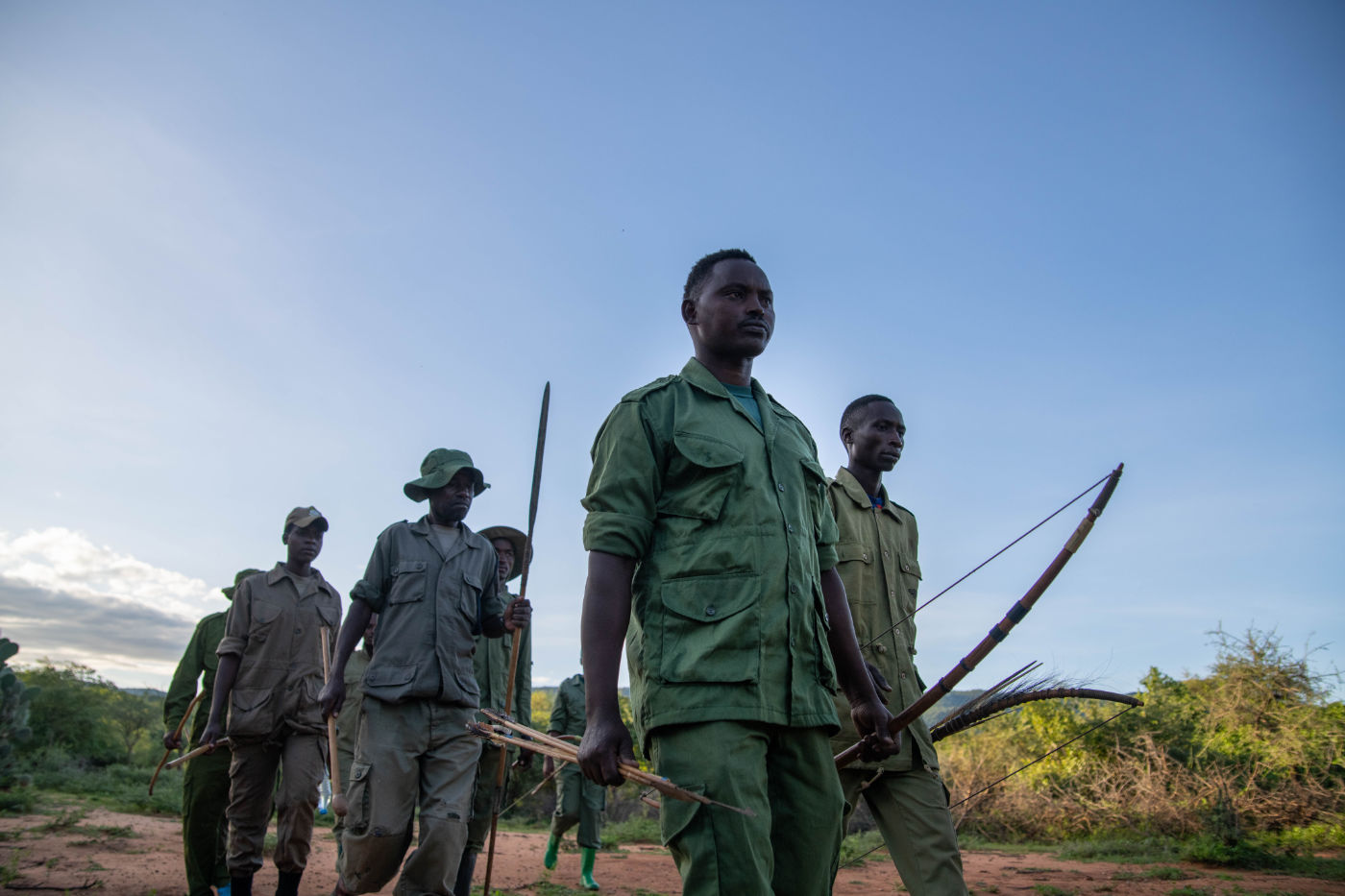
First, there is a clear flight toward high-integrity benchmarks. Capital is concentrated around the Integrity Council for the Voluntary Carbon Market’s (ICVCM) Core Carbon Principles (CCP) label. Aligning project methodologies with these international standards has become non-negotiable given the clear signals from the key market actors. Higher credit prices mean more financial revenue flowing not only back to the investor, but to the communities, who in Tanzanian REDD projects receive 61% of credit sales revenues. While this is all super logical and goes a long way to address the market’s concerns over accounting integrity, because of the lag between conservation activities and verifying emission claims, it does mean that some verified credits diligently generated by communities are now stranded assets, without a route to market. Is it fair that these communities are not going to receive revenues for this work? And the same communities are now being asked to wait for a year or two while new methodologies are finalised and issued from which “new” credits can be issued? How do they fund their important conservation work in the meantime?
Second, we are seeing the early stages of a move beyond carbon alone. While carbon credit sales remain the primary financial mechanism today, as we approach net-zero, corporates will move towards broader nature-positive goals. In the years ahead, financing natural landscapes will increasingly depend on our ability to measure, demonstrate, and monetise biodiversity and ecosystem health, alongside evaluating and show-casing the real (hopefully positive!) changes that carbon finance can deliver. If we design projects today that are locked solely into single-asset carbon revenues, we risk creating stranded assets in the future. Multi-asset flexibility has to be built in at project design.
Finding the “Missing Middle”
If you look at the global nature finance sector today, it is strikingly top-heavy.
On one side, there seem to be hundreds of institutional actors looking to deploy finance, alongside technical firms offering satellite monitoring, legal advice, or carbon accounting. On the other side are local communities and nature’s stewards who look after nearly half of the world’s remaining biodiversity.
Yet, there are remarkably few entities operating in the space between: where real, on-the-ground asset management meets international capital markets. High-level service providers rarely understand what it takes to manage a natural landscape on a day-to-day basis, while ground-level project managers often lack the commercial expertise or access to engage with global buyers.
This is where LEVEL sits. Our goal isn’t to replace technical or legal providers, but to act as an end-to-end nature finance business that designs, structures, and commercialises projects. Drawing on Carbon Tanzania’s decade of operational experience in East Africa, Level bridges that gap by connecting proven land stewardship with global capital markets.
Looking Forward
Ultimately, our perspective at Level is shaped by the lived reality of having built projects from scratch. Connecting land stewardship with international finance requires understanding both ends of the supply chain with equal clarity.
By pairing practical, ground-level conservation experience with market intelligence and networks, we can help ensure that nature-based projects are not only viable today, but are future-proofed. As we move forward, Level is now exploring the potential to bring our experience to project collaborations in Kenya, DRC, Central African Republic, Ghana and Mozambique.
By Jo Anderson, Co-Founder & CEO at Level


