My personal interest in our human connection with nature came early – an encounter with Guy the Gorilla at London Zoo aged 3. My parents tell me that I was transfixed by his deep, staring eyes; windows to the soul we are told.
That early spark grew into a lifelong interest. Fuelled by a childhood exploring local woodlands and an enthusiasm for BBC wildlife documentaries, I determined that I needed to be involved in efforts to protect our natural world. This eventually lead me to East Africa where I learned directly from many practitioners about the various approaches, practical and philosophical, to biodiversity conservation and management.
From practice to deeper questions
In the early 1990s, many conservationists were already challenging the “fortress” model of wildlife conservation characterised by the creation of national parks and reserves that excluded people from the process, both logistically and financially. In response more community-based approaches emerged, grounded in the idea that lasting conservation must also support human well-being.
Carbon Tanzania grew out of a strong commitment to being part of this shift. We wanted to develop a model of conservation finance that was genuinely founded on the deep connection between people and their environment. We wanted to recognise the inherent desire and ability of communities that have secure rights over their land and resources to make the right choices about how to manage and protect them.

What we learned from listening
Over the years, our work has delivered over US$ $20 million into communities across Tanzania, helping to achieve both measurable forest conservation results and local development outcomes. But a few years ago, thanks to conversations with friends and family about what “impact” really means, I began to wonder: were we capturing the full picture? Could carbon revenues be having unintended consequences? Were we missing what matters most to communities?
Assessing ecological outcomes, like preventing habitat loss or increasing wildlife numbers, is relatively straightforward. But understanding the human side of conservation is more difficult. Many frameworks use externally defined indicators, such as income or its proxies. These may serve investors and funders, but they often miss complex, locally significant dimensions of well-being. They don’t always reflect how people experience change, or whether interventions genuinely support lives and livelihoods.
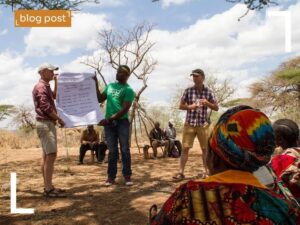
To explore this, we worked with practising academics and researchers who had experience in East Africa and used research methodologies that place local people at the centre of evaluation. We commissioned studies in three of Carbon Tanzania’s project areas, designed to surface the lived experiences of communities, rather than testing pre-determined outcomes of assumed importance.
Happily, these studies revealed that people were positive about the effects of the carbon revenues on their lives – especially around education, health and community services. The research also highlighted where the projects were not always accounting for the needs and views of certain groups, such as women or people living far from village centres. These insights allowed the Carbon Tanzania team to adapt how they support local governance structures and decision-making.
For a closer look at one of the first pilots in Makame WMA, read this field perspective from Carbon Tanzania’s Project Manager, Kisaro Lombutwa.

Introducing REFLECT
As a result of these studies, the team at Level developed REFLECT – a participatory, principles-based approach to evidencing social change.
REFLECT supports the ancient connection between people and the natural world by helping ensure conservation reflects the lived realities of those who protect and live alongside nature.
The product, REFLECT for Carbon (RfC), is a human-centred iterative learning platform for measuring social change in carbon projects.
RfC enables carbon developers to strengthen project integrity and resilience, by providing them with a framework for in-depth evaluation of the social outcomes and operational risks in their projects, as identified and defined by the community stakeholders themselves. RfC presents an evidence-based, dynamic and iterative approach to social change that encourages continuous organisational learning, to drive long-term, meaningful change that benefits the climate, nature and people.
Officially launched during London Climate Action Week 2025, REFLECT for Carbon is now available for carbon project developers and funders to use.
From project implementers to investors and funders, REFLECT for Carbon offers a tested approach to understanding how nature-based carbon projects are experienced by the communities at their centre.
If you believe people should be at the heart of conservation, now’s the time to explore REFLECT.
Want to know more?
- Explore REFLECT for Carbon
- Read Carbon Tanzania Project Manager, Kisaro Lombutwa’s, account from using REFLECT in Makame WMA
- See the REFLECT press release